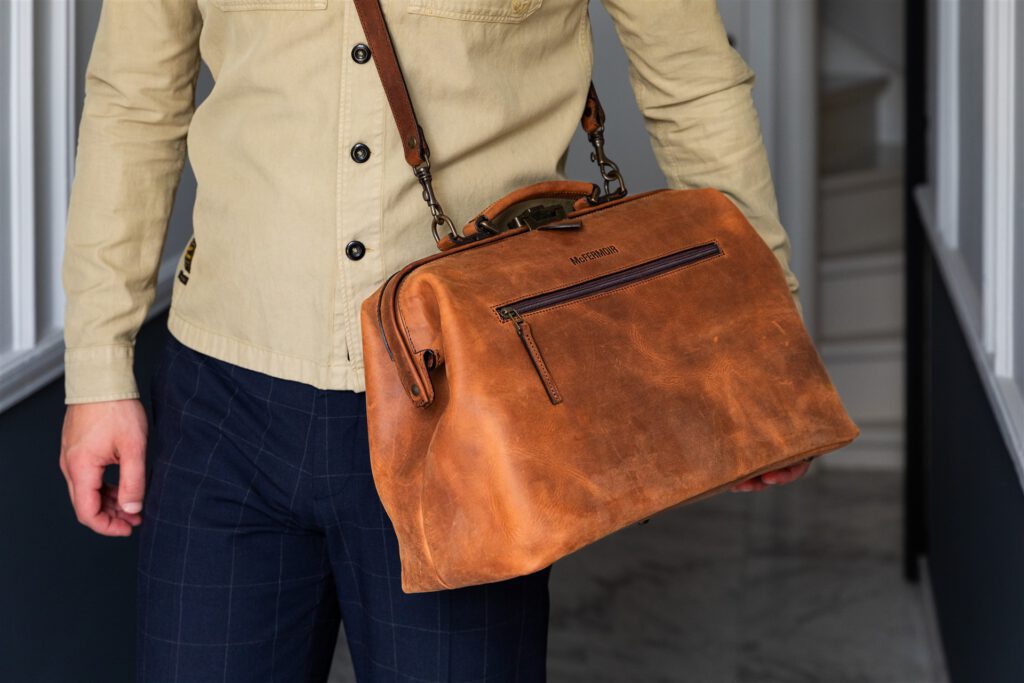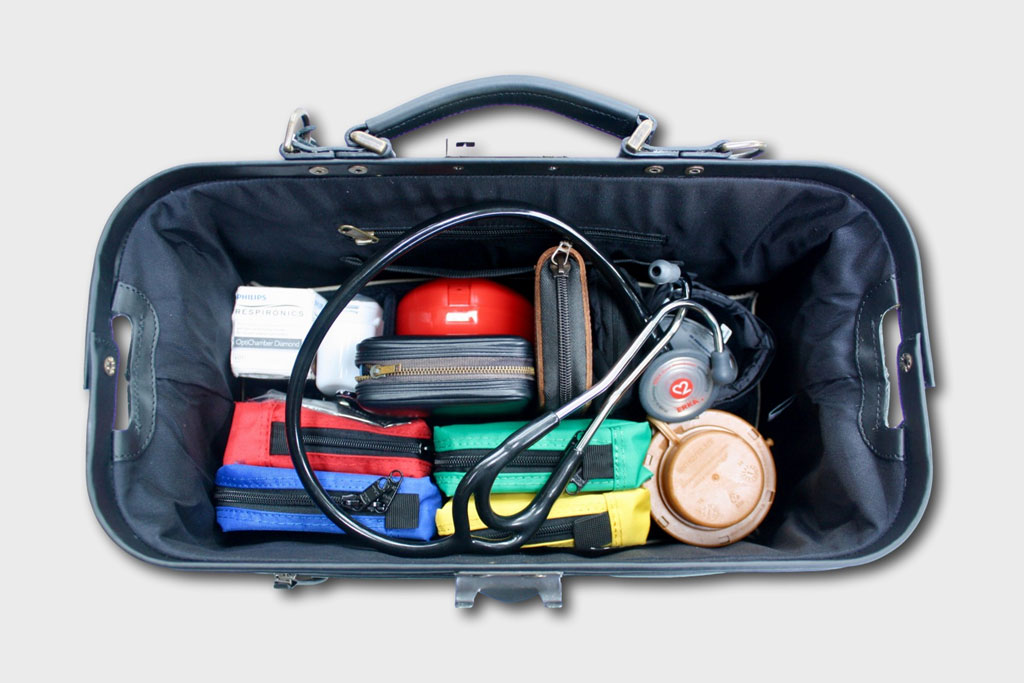
A well-organised doctor’s bag is essential for GPs and medical professionals who want to work efficiently and stress-free during consultations and house calls. Whether you’re an experienced doctor or just starting, an organised bag can significantly improve your working day. Here are 5 tips to optimally arrange your doctor’s bag.
1. Choose the right compartment system
A good compartment system is the basis of an organised doctor’s bag. Choose a bag with sufficient compartments to arrange your medical instruments and accessories clearly. Many doctor’s bags offer compartment systems made of leather or other durable materials, with multiple large and small compartments. This helps to keep items like stethoscopes, blood pressure monitors and thermometers separate and quickly accessible.
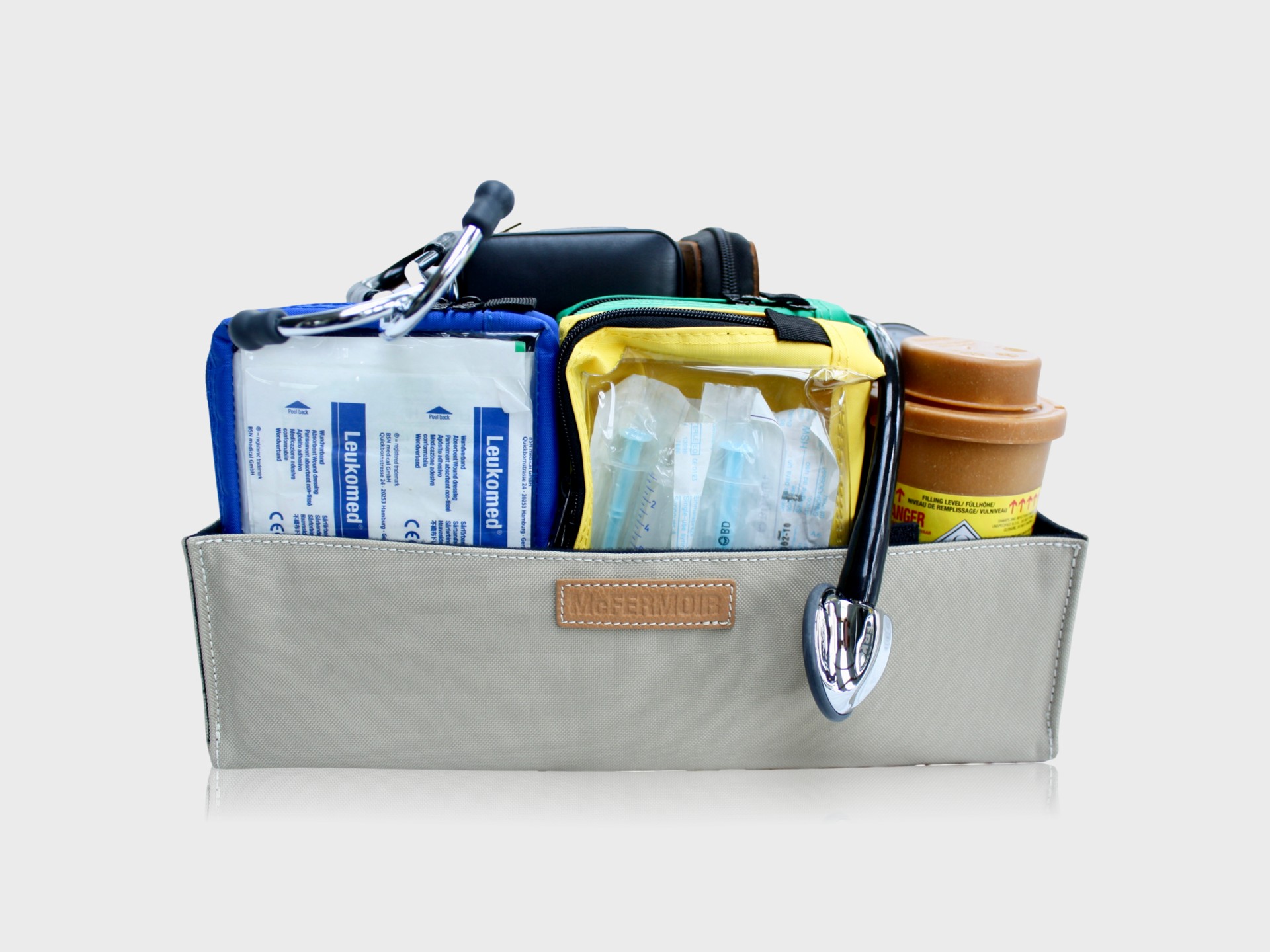
Tip: If your bag doesn’t have a built-in compartment system, you can purchase separate compartment systems from us that fit in almost any doctor’s bag. This prevents your items from getting mixed up.
2. Sort by frequency of use
Place the items you use most frequently, such as a stethoscope or otoscope, in the most accessible compartments. Less frequently used items, such as diagnostic aids or spare parts, can be stored in the less accessible compartments. This saves time during consultations and prevents unnecessary searching.
Practical example:
- Top compartments: Stethoscope, blood pressure monitor, thermometer.
- Middle compartments: Bandaging materials, gloves, alcohol pads.
- Bottom compartments: Spare batteries, extra needles, documents.
3. Use small storage boxes or cases
For small items such as needles, ampoules, plasters or medicines, you can use small storage boxes or cases. This prevents these items from lying loose in your bag and being difficult to find. Transparent boxes are ideal because you can immediately see what’s in them.
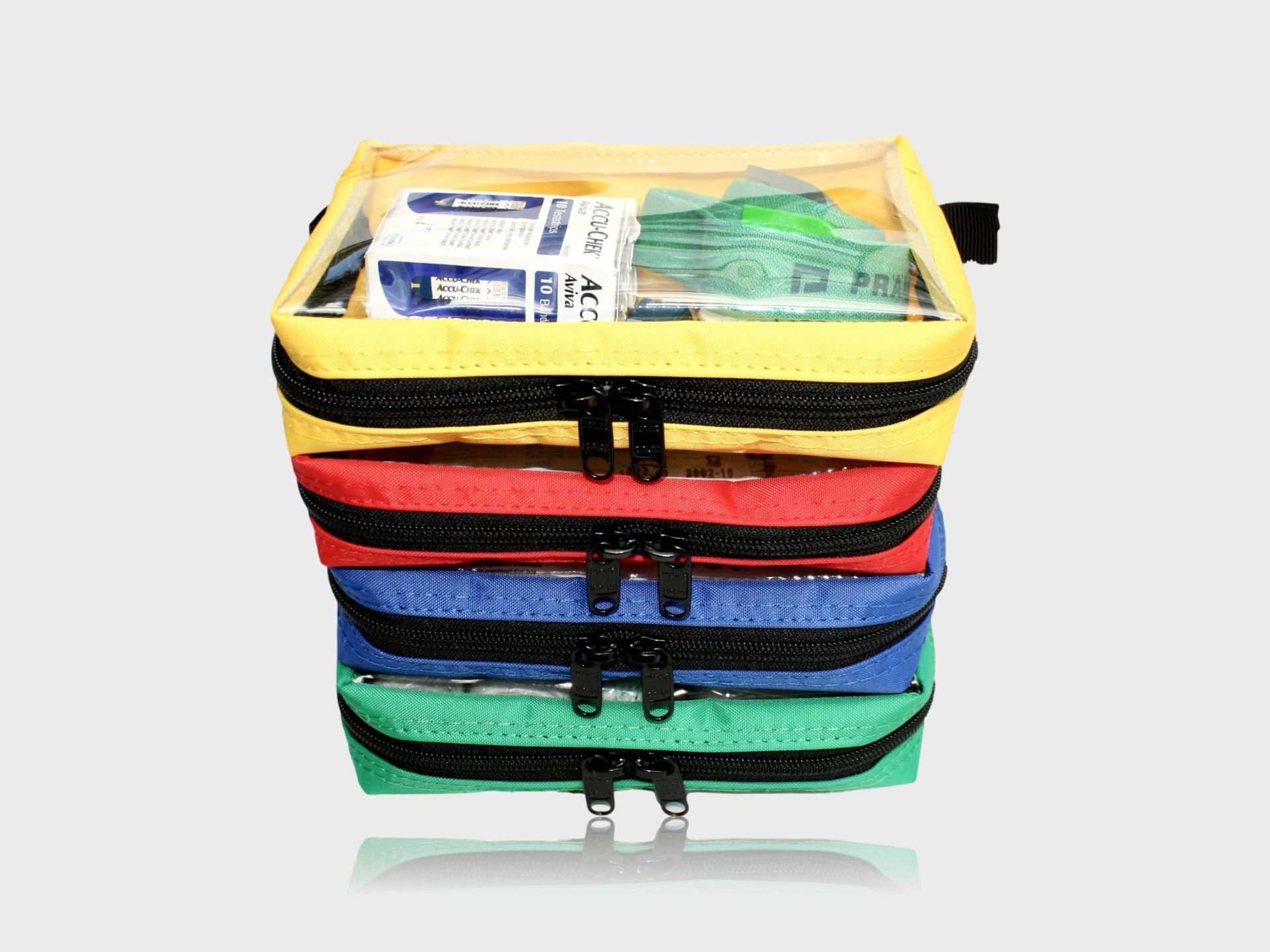
View product: Set of 4 coloured pouches with window
Extra tip: Label the boxes or cases with the contents, such as “injections”, “bandages” or “medication”. This makes it even easier to quickly grab what you need.
4. Check the contents regularly
An organised doctor’s bag requires regular maintenance. Check weekly whether your bag is fully equipped and whether items need to be replenished. Think of:
- Replacing used bandaging materials.
- Checking the expiry date of medicines.
- Refilling gloves and alcohol pads.
By building in this routine, you prevent grabbing the wrong thing during a consultation.
5. Choose the right bag size
The size of your doctor’s bag plays a major role in how organised you can work. A bag that’s too small can become messy, while a bag that’s too large is unnecessarily heavy. Research shows that a medium size doctor’s bag is ideal for most GPs, as it offers sufficient space without being impractically large.
Tip: Choose a bag that suits your specific needs. For example, if you often make emergency house calls, a bag with extra space for emergency materials can be handy.
A well-organised doctor’s bag makes your working day more efficient and less stressful. By investing in a bag with a good compartment system, regularly checking the contents and using clever storage solutions, you can always be prepared for every situation.